

- By admin
- August 21, 2026
- Comment Off
Website security is no longer optional for businesses operating online. Whether you run a small business website, an ecommerce store, a professional portfolio, or a large online platform, visitors expect their information to be protected. This is where an SSL Certificate becomes an essential part of your website infrastructure.
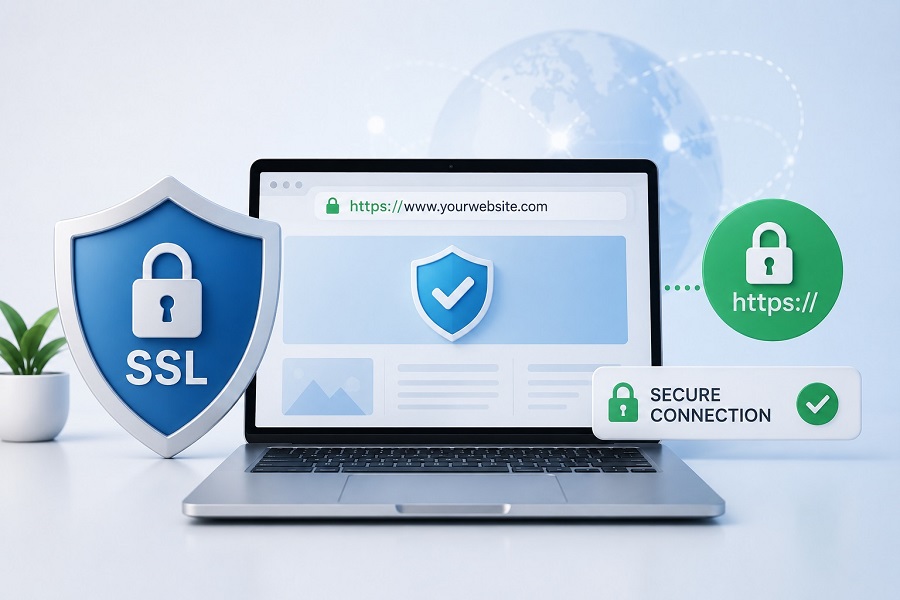
So, what is an SSL certificate? An SSL certificate is a digital certificate that helps establish an encrypted and secure connection between a website and its visitors. When SSL is correctly installed, your website uses HTTPS instead of HTTP, helping protect information exchanged between the visitor’s browser and your web server.
But SSL is about more than displaying a padlock in a browser. It contributes to Website Security, protects sensitive information, supports customer trust, and is an important part of modern website best practices.
In this guide, we’ll explain what is SSL and how does it work, why your website needs it, how SSL affects SEO, and what you should consider when choosing an SSL solution.
What is an SSL Certificate?
An SSL Certificate is a Digital Certificate that helps authenticate a website and establish an encrypted connection between the website and a user’s browser.
SSL stands for Secure Sockets Layer. Although modern security systems primarily use TLS (Transport Layer Security), the term “SSL” remains widely used when discussing website certificates.
An SSL certificate can help protect information such as:
- Login credentials
- Contact form submissions
- Personal information
- Payment-related information
- Account details
- Other sensitive data transmitted through a website
A website using SSL normally displays HTTPS in its address instead of HTTP. Modern browsers also use security indicators to help users understand whether a connection is secure.
What is SSL and How Does It Work?
So, what is SSL and how does it work?
When a visitor connects to an SSL-enabled website, the browser and server establish a secure connection using encryption. The certificate helps authenticate the website and allows the connection to be encrypted.
In simple terms, the process works like this:
- A visitor opens an HTTPS website.
- The browser communicates with the website’s server.
- The server provides its digital certificate.
- The browser checks whether the certificate is valid and trusted.
- The browser and server establish encryption.
- Information exchanged through the connection is protected using encryption.
This process happens very quickly and is mostly invisible to the visitor.
How Does an SSL Certificate Work?
How does an SSL certificate work? It uses cryptographic technology to establish trust and help encrypt communication between a browser and server.
The certificate contains information about the website and is issued by a trusted Certificate Authority (CA). Depending on the type of certificate, the validation process can confirm control over a domain or provide additional organizational information.
What Does an SSL Certificate Do?
So, what does an SSL certificate do for your website?
An SSL certificate primarily helps with three important areas:
1. Encryption: SSL Encryption helps protect information while it travels between the visitor and the website.
2. Authentication: SSL can help confirm that visitors are communicating with the intended website rather than an impersonating site.
3. Website Trust: A properly configured HTTPS connection gives visitors an additional indication that your website takes security seriously.
Together, these features contribute to stronger SSL Certificate Security, Website Encryption, and overall Online Security.
Why Does Your Website Need an SSL Certificate?
One of the most important questions businesses ask is why your website needs an SSL certificate.
The answer is simple: modern websites regularly exchange information with visitors, and that information should be protected.
Even a basic business website may have contact forms, login areas, newsletter subscriptions, booking forms, or other interactive features.
So, why does my website need SSL? SSL helps create a secure connection for information exchanged between your website and visitors.
It is also increasingly expected by users. When browsers warn visitors about insecure connections, people may become hesitant to continue browsing or provide information.
Why Is SSL Important for a Website?
Understanding why SSL is important for a website requires looking beyond technical security.
A secure website can provide several benefits:
- Protects information during transmission
- Helps establish website authenticity
- Improves visitor confidence
- Supports secure login and form submissions
- Helps protect customer information
- Enables HTTPS
- Supports modern website security standards
- Contributes to a professional online presence
For businesses, security and trust are closely connected.
What is HTTPS and How Does It Work?
What is HTTPS and how does it work?
HTTPS stands for Hypertext Transfer Protocol Secure. It is the secure version of HTTP and uses encryption to protect communication between a browser and web server.
When a website uses HTTPS, visitors will typically see a URL beginning with:
https://
rather than:
http://
HTTPS is now standard for most modern websites.
SSL vs HTTPS: What Is the Difference?
A common question is SSL vs HTTPS what is the difference?
SSL/TLS refers to the security technology used to encrypt communication, while HTTPS is the secure version of HTTP that operates over that protected connection.
In everyday website terminology, people often use “SSL” to describe the certificate and “HTTPS” to describe the secure website connection.
What is the Difference Between SSL and TLS?
What is the difference between SSL and TLS?
SSL is the older technology, while TLS is its modern successor. Current secure web connections generally use TLS rather than the original SSL protocols.
However, the term SSL certificate is still commonly used by hosting providers, website owners, and customers.
So, when someone searches for an SSL Certificate, they are generally referring to the certificate used to enable a secure HTTPS connection, even though the underlying protocol is typically TLS.
How Does SSL Protect a Website?
How does SSL protect a website? SSL/TLS helps protect data as it travels between the user’s browser and your website.
Without an encrypted connection, transmitted information may be more vulnerable to interception in certain circumstances.
With HTTPS, information is encrypted during transmission, making it much harder for unauthorized parties to understand the data if they intercept it.
This is particularly important for websites handling:
- Passwords
- Personal information
- Payment information
- Customer accounts
- Business communications
- Contact forms
Does SSL Protect Customer Information?
Yes, does SSL protect customer information is an important question, and SSL/TLS can help protect information while it is being transmitted between the visitor and the website.
However, SSL is not a complete cybersecurity solution.
A website can have HTTPS and still be vulnerable to other threats, such as compromised passwords, outdated plugins, malware, server vulnerabilities, or poorly secured applications.
That is why SSL should be considered one part of a broader Website Protection strategy.
Does SSL Protect Passwords and Payment Information?
Does SSL protect passwords and payment information? HTTPS encryption helps protect this information while it travels between the browser and server.
For ecommerce websites, this is particularly important because customers expect their personal and payment-related information to be handled securely.
However, website owners should also use secure payment providers, strong authentication, updated software, secure hosting, monitoring, and other appropriate security measures.
Does SSL Prevent Hackers From Accessing Data?
A common misconception is that SSL completely prevents hacking.
Does SSL prevent hackers from accessing data? SSL/TLS helps protect data in transit, but it does not prevent every type of cyberattack.
For example, SSL cannot by itself protect a website from:
- Malware
- Weak passwords
- Vulnerable plugins
- Server compromises
- Phishing
- Application vulnerabilities
- Social engineering
- Stolen administrator credentials
Think of SSL as an important security layer rather than a complete cybersecurity system.
Benefits of SSL Certificate for a Website
There are several benefits of SSL certificate for a website, particularly for businesses.
Better Website Security: SSL helps establish encrypted communication between visitors and your server.
Greater Customer Confidence: Visitors are more likely to trust websites that use HTTPS and maintain visible security standards.
Protection for Sensitive Data: SSL helps protect information transmitted through forms, login pages, and other secure areas.
HTTPS Support: Installing SSL enables your website to use HTTPS.
Professional Image: A secure website can contribute to a more professional online presence.
Benefits of HTTPS for a Website
The benefits of HTTPS for a website extend beyond encryption.
HTTPS can help:
- Protect data transmission
- Improve user confidence
- Support secure authentication
- Enable modern browser features
- Reduce browser security warnings
- Provide a more trustworthy browsing experience
For these reasons, HTTPS is now considered a standard requirement for most professional websites.
Benefits of Website SSL Security for Small Businesses
The benefits of website SSL security are especially important for small businesses.
Customers may be unfamiliar with a smaller brand, so establishing trust is essential. A secure website demonstrates that the business has taken basic steps to protect its online environment.
SSL security for small business websites should therefore be included as part of a wider website security strategy.
Is an SSL Certificate Necessary for a Website?
Is an SSL certificate necessary for a website? For virtually every modern website, HTTPS should be considered essential.
Even if your website does not process payments or collect highly sensitive information, HTTPS provides a more secure and trustworthy browsing environment.
Do I Need an SSL Certificate for My Website?
Do I need an SSL certificate for my website? If you operate a business website, ecommerce store, blog, membership platform, or any site that collects user information, using HTTPS is strongly recommended.
Most reputable hosting environments make SSL available, and many provide certificates as part of their hosting packages.
Do Small Businesses Need SSL Certificates?
Do small businesses need SSL certificates? Absolutely.
Small businesses often collect customer information through contact forms, quotation requests, booking systems, newsletter forms, and ecommerce functionality.
Even a simple company website benefits from HTTPS because it establishes a secure connection and creates a more professional experience.
Does Every Website Need SSL?
Does every website need SSL? While specific requirements vary, HTTPS has become the standard for modern websites.
Visitors expect secure connections, browsers increasingly highlight insecure HTTP pages, and modern web technologies often assume HTTPS.
For these reasons, using SSL/TLS is a sensible choice for almost any website.
Is SSL Required for Ecommerce Websites?
Is SSL required for ecommerce websites? Ecommerce websites have an especially strong need for HTTPS because they handle customer accounts, personal information, checkout processes, and payment-related data.
Why SSL is important for ecommerce websites comes down to protecting communication and maintaining customer confidence.
However, ecommerce security requires more than an SSL certificate. Businesses should also use secure payment gateways, updated ecommerce software, strong authentication, secure hosting, monitoring, backups, and appropriate security policies.
How Does SSL Affect SEO?
A common SEO question is does SSL affect website SEO?
HTTPS is a positive security standard and has been used by Google as a ranking signal. However, SSL should not be viewed as a shortcut to achieving high search rankings.
So, how does SSL affect SEO? Moving from HTTP to HTTPS can contribute to a secure, trustworthy website environment, but search visibility still depends on many other factors, including content quality, technical SEO, backlinks, website performance, relevance, and user experience.
Does HTTPS Improve Google Rankings?
Does HTTPS improve Google rankings? HTTPS is a lightweight ranking signal, but the effect alone is unlikely to transform a website’s search performance.
The bigger value is that HTTPS is now a standard expectation for modern websites and helps provide a safer browsing experience.
Final Thoughts
Understanding what an SSL certificate is and why it matters is essential for every modern website owner.
SSL/TLS helps establish a Secure Connection between visitors and your website, protects information during transmission, enables HTTPS, and supports overall Website Security. It can also contribute to website trust and provide a stronger technical foundation for SEO.
Whether you run a personal blog, small business website, online store, or large web application, HTTPS should be considered a fundamental part of your website setup.
The most important point is that SSL is not a complete cybersecurity solution. It works alongside secure hosting, strong passwords, regular updates, backups, malware protection, monitoring, and other security practices.
If you are launching a new website, check whether your hosting package includes SSL. If you already have a website, verify that HTTPS is correctly configured, your certificate is valid, and HTTP traffic is properly redirected.
A secure website is better for your visitors, better for your business reputation, and an important part of building a trustworthy online presence.