

- By admin
- August 28, 2026
- Comment Off
Choosing the right web hosting service is an important decision for any company building or maintaining an online presence. Your hosting environment affects your website’s speed, reliability, security, uptime and ability to handle visitors. One of the most common decisions businesses face at this stage is business hosting vs shared hosting — understanding the difference can help you choose the option that best fits your growth and performance needs.
For a small website, basic hosting may be enough. But as a company grows, its hosting requirements can become more demanding. More visitors, larger websites, ecommerce functionality, business applications and increased security requirements can all influence which hosting solution is appropriate.
Two common options businesses consider are shared hosting and business hosting.
While both can provide the resources needed to run a website, they are designed for different requirements. Understanding the difference between business hosting and shared hosting can help you choose a solution that fits your company’s current needs and future plans.
What is Shared Hosting?
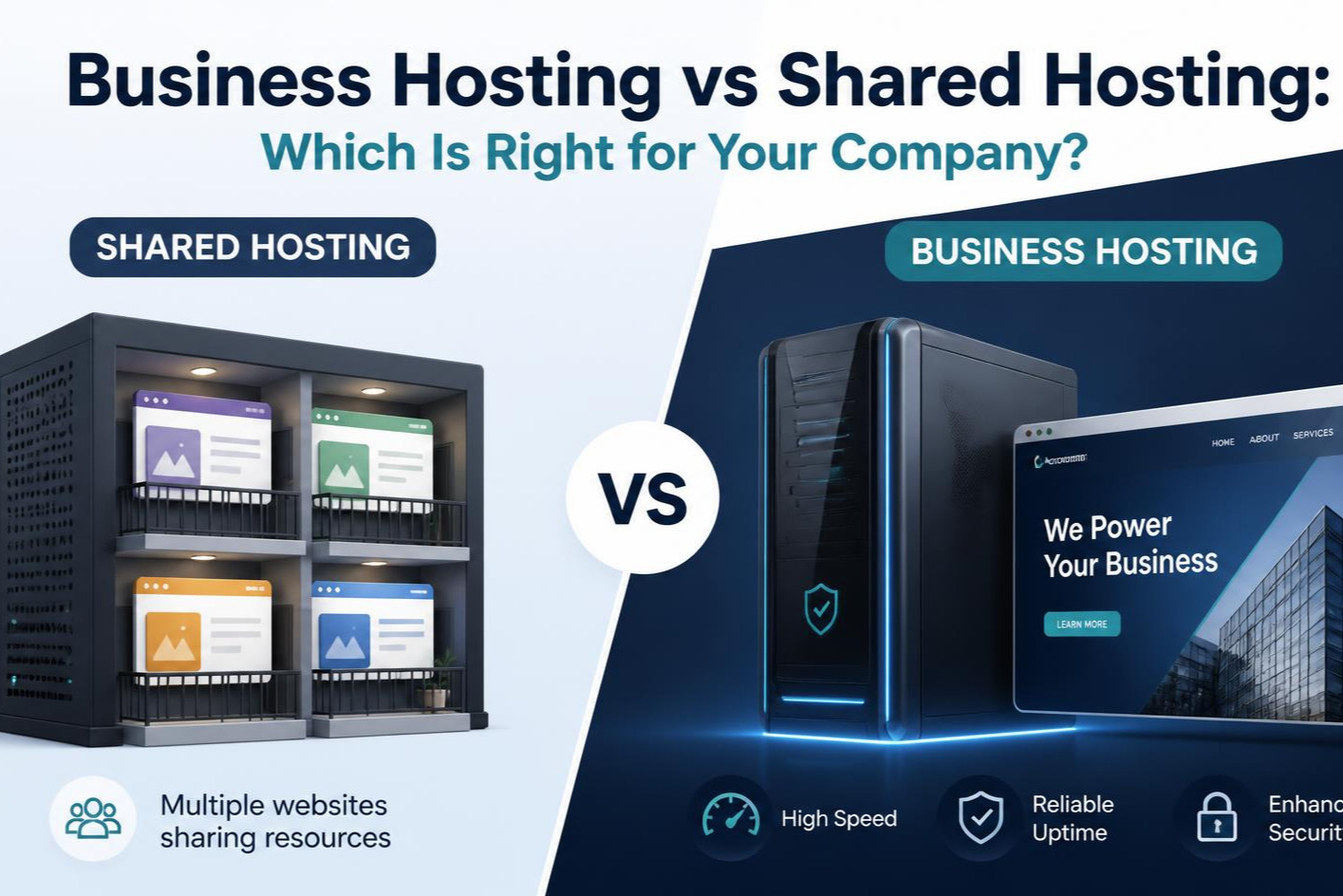
Shared hosting is a type of web hosting where multiple websites are hosted on the same physical server and share its available resources.
These resources can include:
- CPU
- RAM
- Storage
- Server bandwidth
- Hosting infrastructure
Because the server resources are shared between multiple websites, shared hosting is generally one of the more affordable web hosting solutions available.
This makes it popular with individuals, bloggers, startups and small businesses that have relatively simple websites and limited traffic.
For a new business website that doesn’t receive a large number of visitors, shared hosting can provide an economical way to establish an online presence.
What is Business Hosting?
Business hosting is designed with the needs of businesses in mind. Depending on the hosting provider, business hosting packages may offer more resources, improved performance, enhanced security features, better support and greater scalability than basic shared hosting.
Business hosting can be suitable for companies that rely heavily on their websites for generating enquiries, selling products, providing services or communicating with customers.
Features may include:
- Increased server resources
- Improved website performance
- Higher reliability
- Enhanced security
- SSL support
- Automated backups
- Business email
- Better technical support
- Scalable hosting resources
- Higher performance infrastructure
The exact features vary between hosting providers, so it is important to compare plans carefully before choosing a business web hosting solution.
Business Hosting vs Shared Hosting: What’s the Difference?
The main difference is the level of resources, performance, support and business-focused features provided by the hosting environment.
Shared hosting prioritizes affordability, while business hosting generally focuses more heavily on performance, reliability and resources.
1. Website Performance
Website speed is important for both visitors and businesses.
If your website takes too long to load, visitors may leave before interacting with your content, products or services. Slow performance can also create a poor overall user experience.
With shared hosting, multiple websites use the same server resources. During periods of high activity, resource usage by other websites can potentially affect the performance available to your site.
A quality business hosting provider may offer stronger infrastructure and more resources, helping websites handle higher workloads more consistently.
If your website is a critical part of your business, performance should be an important factor when comparing hosting plans.
2. Website Traffic
A new website may receive relatively little traffic. In this situation, shared hosting may be perfectly adequate.
However, as your business grows, traffic can increase significantly.
Marketing campaigns, social media activity, search traffic, product launches and seasonal promotions can all result in sudden increases in visitors.
If your hosting plan doesn’t have sufficient resources, high traffic can result in slow loading times or, in extreme cases, temporary availability problems.
Business web hosting can be a better choice for companies expecting consistent traffic growth or occasional traffic spikes.
3. Reliability and Uptime
Website uptime refers to how consistently your website remains accessible to visitors.
For businesses, uptime is particularly important because an unavailable website can mean missed enquiries, lost sales and frustrated customers.
When evaluating business hosting services, look at the provider’s infrastructure, monitoring systems, redundancy and stated uptime commitments.
Don’t choose a hosting provider based only on an advertised uptime percentage. Consider the overall reliability of the service, customer support and how the provider handles technical problems.
4. Website Security
Security should be a priority regardless of which type of hosting you choose.
A business website may contain valuable information and could become a target for automated attacks, malware and unauthorized access attempts.
A good secure web hosting solution may provide features such as:
- SSL certificates
- Malware scanning
- Firewalls
- DDoS protection
- Secure server infrastructure
- Account security
- Automated backups
- Security monitoring
However, hosting security is only one part of protecting your website. You should also keep your CMS, plugins and themes updated, use strong passwords and implement appropriate access controls.
5. Business Email
Professional communication is another important consideration.
Many businesses want email addresses such as:
Some business hosting plans include professional email accounts, while others focus exclusively on website hosting.
If business email is important to your company, check exactly what is included in your hosting package before purchasing.
Don’t assume that every hosting plan includes the same email features.
6. Technical Support
When your website is important to your business, technical support can become extremely valuable.
A problem with your website, server configuration, database or DNS can potentially affect your operations.
Basic shared hosting plans may provide standard support, while some business hosting providers offer faster response times, specialized assistance or priority support.
Before choosing a provider, consider:
- Support availability
- Contact methods
- Response times
- Technical expertise
- Knowledge base and documentation
- Backup and recovery assistance
Good customer support can be particularly valuable when dealing with unexpected hosting problems.
7. Scalability
Your hosting requirements today may not be the same as your requirements next year.
A company might start with a small informational website and later add:
- Ecommerce functionality
- Online booking
- Customer accounts
- Large media files
- Business applications
- More website traffic
- Additional websites
This is where scalable web hosting becomes useful.
Business hosting can provide a more suitable path for companies expecting their hosting requirements to grow.
However, if your website outgrows business hosting, you may eventually need a VPS, cloud hosting or a dedicated server.
When is Shared Hosting the Right Choice?
Shared hosting can be a good choice when your company has a relatively small website and wants to keep hosting costs under control.
It may be suitable for:
- New businesses
- Small company websites
- Portfolio websites
- Blogs
- Informational websites
- Low-traffic websites
- Small projects
If your website doesn’t require significant server resources, paying for a more advanced hosting environment may not provide enough additional value to justify the cost.
The important thing is to choose a reputable shared hosting provider rather than simply selecting the cheapest available plan.
When Should You Choose Business Hosting?
Business hosting may be more appropriate if your website is an important part of your company’s operations.
Consider business hosting if:
- Your website receives significant traffic.
- Website speed is important to your customers.
- Your business relies on online enquiries.
- You operate an ecommerce website.
- You need additional server resources.
- You require stronger hosting security.
- Your website is expected to grow.
- Downtime could affect your revenue.
- You want more comprehensive hosting support.
For companies that depend heavily on their website, the additional investment in business hosting can be worthwhile.
How to Choose the Right Hosting Provider
Whether you choose shared or business hosting, selecting a reliable web hosting provider is essential.
Look for a provider that offers dependable infrastructure, good customer support, strong security features and transparent pricing.
You should also check whether the provider offers easy upgrades. If your website grows, you should be able to move to a more powerful hosting plan without unnecessary disruption.
For businesses, it can also be useful to choose a hosting company that offers related services such as domain registration, SSL certificates, website backups, and professional business email.
Having these services available through one provider can simplify website management.
Final Thoughts
So, business hosting vs shared hosting — which is right for your company?
The answer depends on your website’s size, traffic, performance requirements, security needs and future growth.
Shared hosting can be an affordable and practical choice for smaller websites with limited traffic and straightforward requirements.
Business hosting is generally better suited to companies that need stronger performance, additional resources, improved reliability, enhanced support and room to grow.
If your website is a critical part of your business, don’t look at hosting simply as an expense. Consider it an investment in your website’s performance, security and reliability.
Ultimately, when it comes to business hosting vs shared hosting, the right choice isn’t about which one is cheaper — it’s about which one matches where your business is headed.
Start by evaluating your current requirements, but also think about where your business is heading. The right business web hosting solution should not only support your website today but also give you a clear path to grow tomorrow.