

- By admin
- August 29, 2026
- Comment Off
Registering a domain name is one of the first steps when launching a website, online store, blog, or business. However, many website owners focus only on choosing the right domain name and forget about an equally important consideration: domain privacy protection.
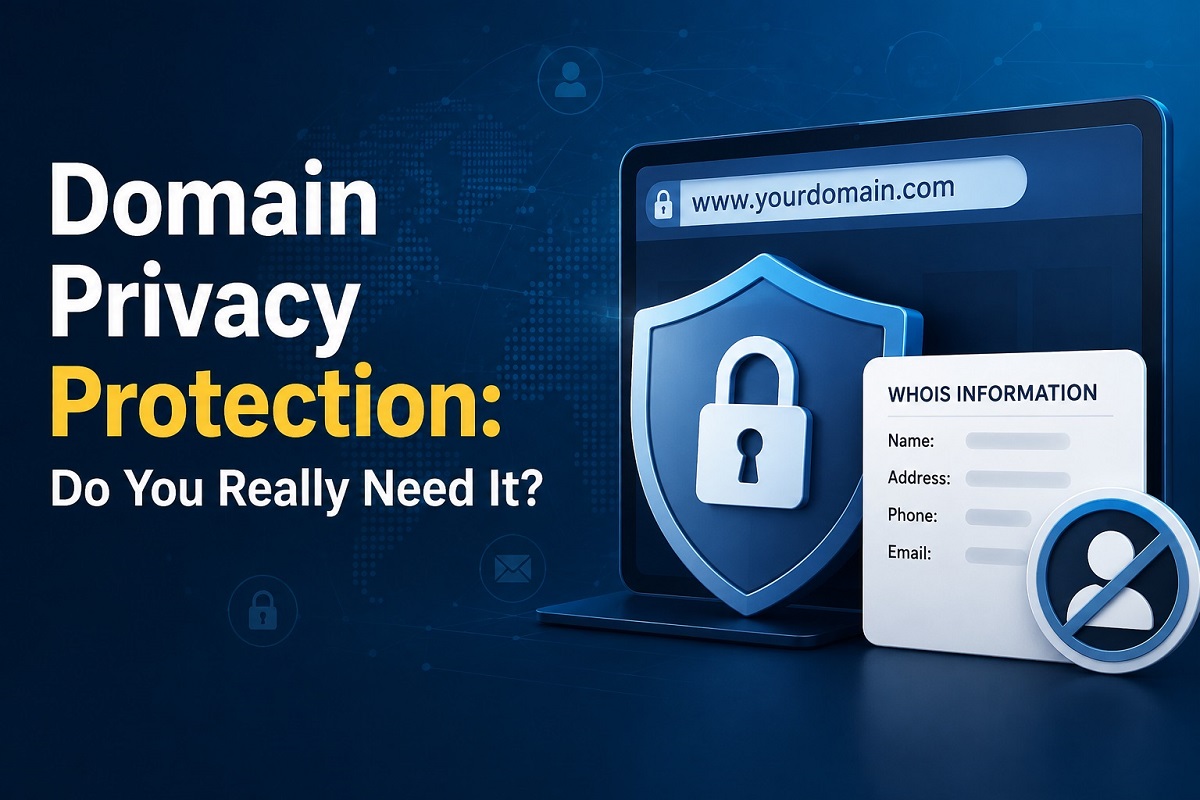
When you register a domain, certain registration information may be collected and, depending on the domain extension and applicable policies, some information may be available through WHOIS or related domain registration lookup services. Historically, this could include details such as a registrant’s name, email address, phone number, and address.
For businesses and individuals, publicly exposed registration information can create privacy, security, and spam concerns. This is where domain privacy protection, sometimes called WHOIS privacy, can be useful.
But do you really need domain privacy protection? Is it worth paying for? Does every domain need it? And what happens if your domain registrar already applies privacy measures?
Let’s look at what domain privacy protection actually does and why it matters.
What Is Domain Privacy Protection?
Domain privacy protection is a service or privacy feature offered by domain registrars that helps prevent certain personal or contact information associated with a domain registration from being publicly displayed in domain registration lookup results.
Traditionally, when someone registered a domain name, the domain’s registration record could contain information about the registrant. Anyone performing a WHOIS lookup could potentially see some of that information, depending on the domain registry, registrar, privacy rules, and applicable regulations.
With WHOIS privacy protection, eligible personal information may be replaced or masked with privacy-related contact information.
For example, instead of displaying a registrant’s personal email address, a privacy service may display a proxy or forwarding contact.
The exact information that is hidden varies depending on the domain registrar, domain extension (TLD), registry policies, and applicable privacy regulations.
Therefore, domain privacy is not necessarily identical for every domain.
Why Is WHOIS Privacy Important?
Your domain name is publicly visible because it needs to function on the internet. However, that does not mean you necessarily want your personal contact details easily discoverable through domain registration databases.
Without appropriate privacy protections, publicly available registration information can potentially be collected by automated systems.
This can lead to unwanted marketing messages, spam emails, suspicious calls, and other unsolicited communication.
For individuals registering domains for personal projects, portfolios, blogs, or side businesses, domain privacy protection can therefore provide an additional layer of privacy.
For businesses, privacy is also relevant because domain registration details can sometimes reveal information about individuals responsible for a domain.
Domain Privacy Can Help Reduce Spam
One of the most common reasons people use WHOIS privacy protection is to reduce unwanted contact.
If a domain registration record exposes an email address, automated bots can potentially collect that information.
Once an email address is collected, it may become a target for spam, promotional messages, phishing attempts, or other unwanted communications.
Privacy protection can reduce the amount of personal contact information exposed through public domain registration records.
However, it is important to understand that domain privacy does not eliminate spam completely.
Your email address may still be publicly available on your website, social media profiles, business directories, contact pages, or other online services.
Domain privacy specifically addresses exposure through domain registration information.
Does Domain Privacy Hide the Domain Owner?
This is where many people misunderstand WHOIS privacy.
Domain privacy does not necessarily make the ownership of a domain completely anonymous.
Depending on the registrar and domain extension, certain information may still be publicly visible. Some TLDs have different registration policies, and some domains may have additional requirements.
Registrars may also retain the actual registrant information internally even when public lookup results display privacy-related information.
Additionally, legitimate authorities, registries, registrars, and other parties with appropriate legal or operational reasons may still have access to registration information.
Therefore, it is more accurate to think of domain privacy as reducing public exposure of personal information, rather than making domain ownership completely invisible.
Domain Privacy and GDPR
Privacy rules have significantly changed the way domain registration information is displayed.
The General Data Protection Regulation (GDPR) and other privacy regulations have encouraged changes in how personal information is collected, stored, and publicly displayed.
Many registrars and registries have introduced measures to limit public access to personal registrant information.
As a result, some domains may already have significant privacy protection without requiring customers to purchase a separate WHOIS privacy service.
This is particularly important when comparing domain registrars.
Before paying extra for domain privacy protection, check what privacy features are already included with your domain registration.
Do You Need to Pay for Domain Privacy?
Whether you need to pay for domain privacy depends on your domain registrar and extension.
Many registrars offer privacy protection at no additional charge for eligible domains, while some providers may sell it as an optional paid service.
If privacy is already included with your domain registration, there may be little reason to pay an additional fee simply for the same feature.
Before purchasing a domain, compare the registrar’s pricing and determine whether WHOIS privacy is included.
Don’t look only at the introductory domain price. Consider the renewal price, privacy options, domain transfer policies, DNS management, security features, and customer support as well.
Should You Enable Domain Privacy?
For many individual domain owners, enabling privacy protection is a sensible choice if it is available.
It can reduce unnecessary exposure of personal registration information and help minimize certain spam and privacy risks.
For small businesses, freelancers, consultants, bloggers, and entrepreneurs who register domains using personal contact information, domain privacy protection can be especially useful.
For larger businesses that register domains using dedicated corporate contact information, the decision may depend on transparency requirements, corporate policies, and the registrar’s privacy options.
The important thing is to understand exactly what information is publicly displayed for your specific domain.
Choosing a Domain Registrar With Privacy Protection
When purchasing a domain, don’t select a registrar based solely on the lowest first-year price.
Look at the complete package.
A good domain registrar should provide clear pricing, reliable DNS management, domain security controls, transfer support, renewal notifications, account security, and appropriate privacy protection.
Check whether WHOIS privacy is included free of charge, whether it applies to the domain extension you want, and whether there are any limitations.
Also pay attention to renewal costs. A domain that costs very little during the first year may become considerably more expensive at renewal.
A transparent pricing structure can make domain management easier over the long term.
Final Thoughts
So, do you really need domain privacy protection?
For many domain owners, the answer is yes—if it is available and provides meaningful protection for your registration information.
WHOIS privacy can help reduce the public exposure of personal contact information associated with your domain registration. This can reduce unwanted spam and make it harder for automated systems to collect certain personal details.
However, domain privacy does not make you completely anonymous, does not eliminate all spam, and does not protect your domain from hijacking on its own.
Your best approach is to combine domain privacy protection with strong domain security practices. Use a reputable domain registrar, enable multi-factor authentication, protect your registrar account, use domain locking, monitor DNS changes, and keep your contact information accurate.
Before paying extra for privacy, check whether your registrar already includes free WHOIS privacy protection with your domain.