

- By admin
- August 28, 2026
- Comment Off
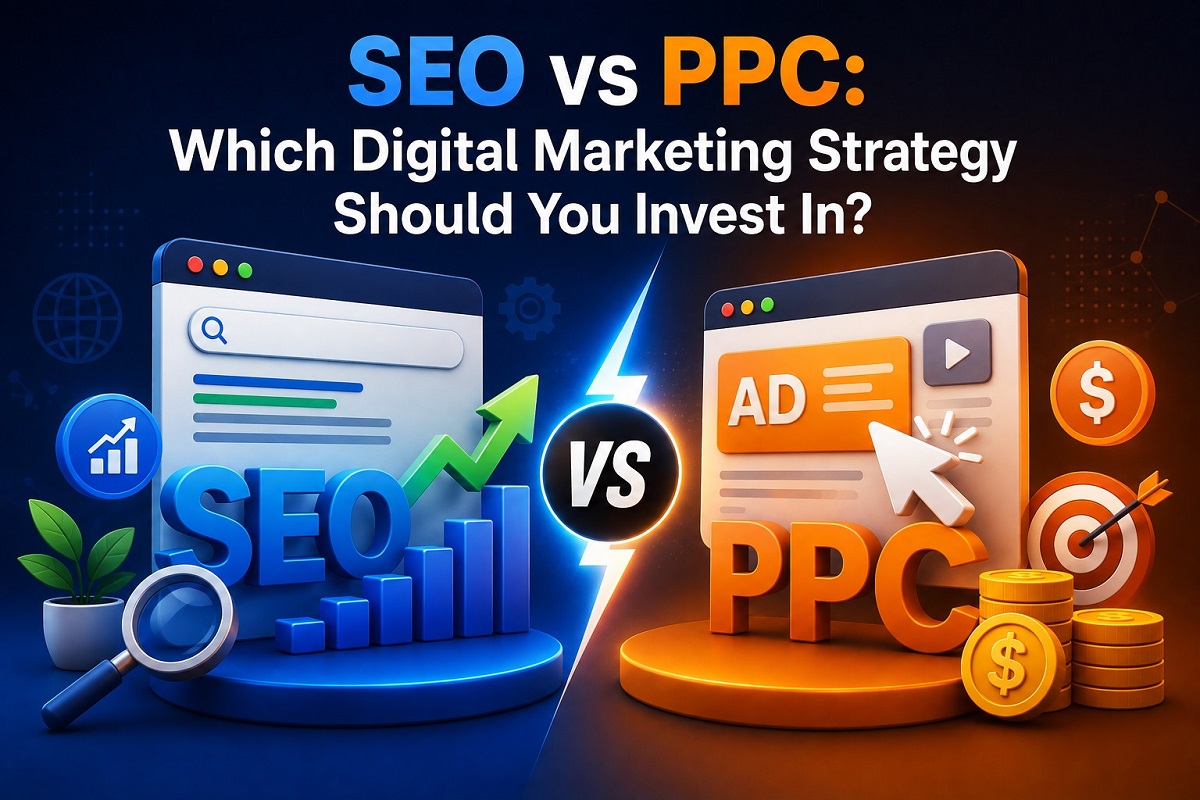
For businesses trying to grow online, one of the biggest marketing decisions is whether to invest in SEO or PPC. Both strategies can increase website traffic, attract potential customers and generate leads, but they work in very different ways. Understanding SEO vs PPC can help businesses choose the right approach based on their marketing goals, budget, and expected results.
Search Engine Optimization (SEO) focuses on improving your website’s visibility in organic search results, while Pay-Per-Click (PPC) advertising allows businesses to pay for advertisements that appear on search engines and other digital platforms.
So, which one should your business choose?
The answer depends on your goals, budget, industry, competition and how quickly you need results. In many cases, the most effective digital marketing strategy isn’t choosing SEO over PPC or PPC over SEO. Instead, businesses can use both strategies together to create a stronger and more sustainable online marketing campaign.
What is SEO?
SEO, or Search Engine Optimization, is the process of improving a website so that it can appear more prominently in organic search engine results.
A comprehensive SEO strategy can include:
- Keyword research
- On-page SEO
- Technical SEO
- Content optimization
- Internal linking
- Local SEO
- E-commerce SEO
- Link building
- Website performance improvements
- Mobile optimization
The goal is to create a website that search engines can understand and users find useful.
For example, if you operate a web design company, you might want your website to appear when potential customers search for terms such as “web design services,” “website design company” or “professional web design.”
Instead of paying for every visitor, SEO aims to build organic visibility that can continue generating traffic over time.
What is PPC?
PPC, or Pay-Per-Click advertising, is a form of paid digital advertising where businesses typically pay when someone clicks on an advertisement.
One of the most popular forms is Google Ads, where businesses can bid on keywords and create advertisements that may appear when users perform relevant searches.
PPC campaigns can target users based on factors such as:
- Search keywords
- Location
- Device
- Audience characteristics
- Interests
- Remarketing audiences
- Search intent
A well-managed PPC campaign can place your business in front of potential customers quickly.
For example, a business selling web hosting could create a paid search campaign targeting people actively searching for “business web hosting” or “WordPress hosting.”
SEO vs PPC: The Main Difference
The biggest difference between SEO and PPC is how you acquire visibility.
With SEO, you work to earn organic rankings.
With PPC advertising, you pay for advertising placement.
SEO generally requires time and ongoing effort before meaningful results appear, while PPC can generate website visits soon after a campaign is launched.
However, PPC traffic generally stops when you stop paying for the advertising, whereas successful SEO can continue generating organic traffic after the initial work has been completed.
Neither approach is automatically better for every business.
SEO Benefits for Businesses
1. Long-Term Organic Traffic
One of the biggest advantages of SEO is its potential to generate organic traffic over the long term.
Once a page establishes strong search visibility, it can continue attracting visitors without paying for every individual click.
However, rankings aren’t permanent. Search results can change as competitors publish content, search algorithms evolve and user behavior changes.
This means SEO requires ongoing maintenance.
2. Builds Online Visibility
A strong SEO campaign can help your business appear for a wide range of relevant searches.
Instead of targeting only one keyword, a well-optimized website can potentially rank for hundreds or thousands of related search queries.
High-quality content can also help establish your website as a useful resource within your industry.
3. Supports Brand Credibility
Users often view organic search results differently from advertisements.
Consistently appearing in relevant organic searches can help increase brand awareness and familiarity.
Publishing useful content can also demonstrate expertise and answer questions potential customers have before making a purchase.
4. Can Deliver Compounding Results
SEO can create assets that continue working over time.
A well-written article, useful service page or comprehensive guide can attract organic visitors for months or even years when it remains relevant and competitive.
This makes SEO particularly attractive for businesses interested in sustainable growth.
PPC Benefits for Businesses
1. Faster Visibility
One of the biggest advantages of PPC marketing is speed.
Instead of waiting for a new page to climb organic search rankings, a properly configured advertising campaign can potentially begin generating impressions and clicks shortly after launch.
This makes PPC useful when a business needs immediate visibility.
2. Precise Targeting
PPC platforms provide businesses with detailed targeting and campaign controls.
Depending on the platform and campaign type, you can target specific locations, audiences, keywords and devices.
For local businesses, this can help focus advertising expenditure on customers in specific geographic areas.
3. Easier Budget Control
With PPC, businesses can establish campaign budgets and control how much they are willing to spend.
You can monitor metrics such as:
- Clicks
- Impressions
- Cost per click
- Conversion rate
- Cost per conversion
- Return on ad spend
This makes PPC campaign management highly measurable.
4. Excellent for High-Intent Searches
PPC can be particularly useful for searches where users are ready to take action.
For example:
- “buy domain name“
- “web hosting plans“
- “SEO services near me”
- “business email hosting“
These searches may indicate stronger commercial intent than purely informational searches.
SEO vs PPC: Which Is More Cost-Effective?
This is one of the most difficult questions because the answer depends on your industry and campaign execution.
With SEO, you may invest in:
- SEO professionals
- Content creation
- Technical improvements
- Link building
- SEO tools
- Website development
With PPC, you typically have:
- Advertising spend
- Campaign management costs
- Landing page development
- Conversion optimization
- Ongoing testing
SEO can become highly cost-effective over time because organic clicks don’t carry a direct advertising charge.
However, SEO requires investment before results become significant.
PPC can produce faster results, but every click has an advertising cost.
Therefore, businesses should evaluate cost per lead, conversion rate and customer lifetime value rather than comparing SEO and PPC based only on traffic.
How to Decide Between SEO and PPC
Before investing in either strategy, ask yourself:
How quickly do I need results?
If you need immediate traffic, PPC may be more suitable.
What is my marketing budget?
Consider both short-term advertising costs and long-term SEO investment.
How competitive is my industry?
Highly competitive keywords can require significant SEO effort and PPC budgets.
What are my business goals?
Lead generation, ecommerce sales, brand awareness and local visibility may require different strategies.
Can I invest for the long term?
If sustainable organic growth is important, SEO should be part of your marketing strategy.
Final Verdict: SEO or PPC?
So, SEO vs PPC — which digital marketing strategy should you invest in?
For many businesses, the answer is both.
SEO is a long-term strategy that can build organic visibility, authority and sustainable website traffic. PPC is a powerful paid advertising strategy that can provide immediate visibility and highly targeted traffic.
If your budget allows, combining SEO and PPC marketing can provide a balanced approach.
Use PPC to generate immediate visibility, test commercial keywords and drive short-term campaigns. At the same time, invest in SEO to build valuable content, improve your website and develop a sustainable source of organic traffic.
The right strategy isn’t necessarily the one that brings the most visitors. It’s the one that brings the right visitors and turns them into customers.
By measuring conversions, cost per acquisition, revenue and long-term performance, you can determine how much of your digital marketing budget should go toward SEO, PPC or a combination of both.